
2.3 Programming Best Practices

Programming Best Practices for Edge Systems
Section titled “Programming Best Practices for Edge Systems”Effective edge programming on embedded systems demands a blend of traditional embedded expertise and modern software development methodologies, prioritising efficiency, reliability, and security throughout the lifecycle.
Software Development Methodologies for Edge Systems
Section titled “Software Development Methodologies for Edge Systems”Modern embedded development, particularly for complex edge AI systems, increasingly adopts Agile methodologies. Agile, with its iterative releases, allows for early defect identification and correction, frequent incremental improvements, and better adaptation to evolving requirements. Furthermore, the principles of DevOps, and more specifically DevSecOps, are gaining significant traction in embedded systems to streamline the entire AI model lifecycle. This approach integrates development, security, and operations, promoting automation, collaboration, and improved visibility between edge and cloud systems. A key aspect of this is the “shift left” approach, where software testing and security considerations are incorporated much earlier in the development lifecycle, hopefully leading to faster time-to-market and more robust products.
Code Quality, Architecture, and Memory Strategies
Section titled “Code Quality, Architecture, and Memory Strategies”Adherence to fundamental software engineering principles is paramount in embedded programming. This includes writing small, focused functions (ideally under 100 lines), using descriptive naming conventions, and applying the DRY (Don’t Repeat Yourself) principle to avoid code duplication. Strong abstractions, particularly for hardware interfaces, are crucial as they enable testing on standard development machines rather than solely on target hardware, significantly accelerating the development and debugging process.
Memory management is a critical and nuanced aspect. While completely avoiding dynamic memory allocation at runtime can be crippling for certain problem domains, it is generally advisable to avoid unnecessary dynamic allocations after initial system start up. Instead, using pre-allocated memory pools with robust failsafes can provide flexibility while maintaining predictability. Code optimisation to minimise instruction count and reduce data transfer between the processor and memory is also essential for resource efficiency. For systems with multiple processing cores, leveraging multi-core architectures to efficiently distribute workloads and implementing power-aware scheduling policies are important for balancing performance and energy consumption.
We discuss this more when examining the use of Rust for embedded systems programming in later chapters.
Power-Aware Programming and Optimisation Techniques
Section titled “Power-Aware Programming and Optimisation Techniques”Power management is not merely a hardware concern but a fundamental aspect of software design in embedded systems. Software algorithms must be optimised for energy efficiency, not just raw speed. This involves strategic use of sleep modes, allowing the system to enter low-power states during periods of inactivity and quickly reawaken upon task reception. As previously mentioned, Dynamic Voltage and Frequency Scaling (DVFS) can be implemented to adjust the voltage and clock frequency according to the workload, significantly enhancing energy efficiency while maintaining performance. The adoption of event-driven processing, where the system activates only when specific events occur, is a key algorithmic strategy for minimising power draw and extending battery life in devices like security cameras. Furthermore, the careful selection of low-power components, including microcontrollers, memory, and sensors, is essential from the earliest design phases to minimise overall power consumption.
Robust Debugging, Testing, and Validation Approaches
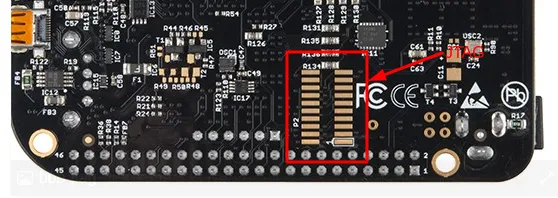
Section titled “Robust Debugging, Testing, and Validation Approaches”Debugging embedded systems is inherently more complex than debugging general-purpose software due to the interplay of real-time tasks, tight hardware-software communication, and severe resource limitations. It requires a specialised toolkit, including in-circuit debuggers (e.g., JTAG - See Figure 7), oscilloscopes, and logic analysers, to monitor signals and system behaviour at a low level. Common debugging techniques include breakpoint debugging, watchpoints for data inspection, print statements/logging, real-time trace analysis, and direct memory and register inspection.
Testing is a distinct and equally critical activity that aims to verify and validate system behaviour, ideally minimising the need for reactive debugging. Rigorous and frequent testing is essential, encompassing unit testing for individual components, white box and black box testing, and specialised security tests like penetration testing to identify vulnerabilities. The increasing adoption of automated testing and Continuous Integration/Continuous Deployment (CI/CD) practices in embedded firmware development signifies a move towards more robust, repeatable, and efficient development cycles, mirroring trends in general software engineering. This automation is crucial for managing the complexity of modern embedded systems and ensuring continuous quality and security, especially with frequent over-the-air (OTA) updates. Hardware-in-the-loop (HIL) simulation is particularly valuable for real-time model validation, allowing for early performance verification in a virtual environment before deployment to physical hardware.
Secure Firmware Development and Lifecycle Management
Section titled “Secure Firmware Development and Lifecycle Management”Security by Design is an important principle for embedded systems, emphasising the integration of security considerations throughout the entire development lifecycle, rather than as an afterthought. This includes implementing secure coding practices, such as validating user inputs to prevent buffer overflows and ensuring proper error handling to avoid revealing sensitive system information. Minimising the attack surface by removing unnecessary features, disabling unused communication interfaces, and implementing strict access controls is also crucial. Securing the boot process with mechanisms that ensure only trusted and verified firmware can be executed is a foundational defence.
Robust authentication and encryption are indispensable for protecting data both at rest and in transit. This involves encrypting sensitive data before storage and during transmission using secure protocols like WebSocket Secure (WSS), HTTPS, or MQTT over TLS. A key security practice is the principle of “keeping the edges dumb,” which advocates for limiting the amount of sensitive information stored on the device and processing such data in more secure, controlled environments like edge servers or the cloud. Finally, regular over-the-air (OTA) updates and patches are essential for addressing security vulnerabilities discovered post-deployment and ensuring the long-term integrity and security of the device.
The increasing complexity and connectivity of edge embedded systems are driving a maturation of embedded software engineering practices, moving from ad-hoc approaches to adopting industrial-grade methodologies. The adoption of DevSecOps, comprehensive automated testing, and continuous lifecycle management is crucial for managing the increasing complexity and security demands of embedded AI systems. This indicates a shift in embedded software development towards more rigorous and proactive approaches, borrowing from cloud-native methodologies to ensure robustness, security, and faster time-to-market for intelligent edge applications.
Programming for edge embedded systems requires a specific mindset due to resource constraints and real-time demands:
🧩Knowledge Check
Section titled “🧩Knowledge Check”Match Embedded Efficiency Concepts
Distributed Programming
Section titled “Distributed Programming”The distributed nature of edge computing introduces both significant opportunities and complex challenges for programming, necessitating new paradigms and coordination mechanisms.
Distributed AI on Edge Devices: Federated Learning
Section titled “Distributed AI on Edge Devices: Federated Learning”Federated Learning (FL) has emerged as a transformative approach for distributed AI on edge devices, enabling collaborative machine learning model training without compromising local data privacy. Unlike traditional distributed learning, where raw data might be transferred to a central server, FL keeps sensitive data on the edge device itself. Only model updates, such as learned parameters, are sent back to a central server for aggregation into an improved global model. This process involves iterative cycles of global model distribution, local training on unique device data, aggregation of local updates, and redistribution of the refined global model.
The significance of Federated Learning lies in its core capability to protect data privacy and confidentiality, making it particularly attractive for highly regulated and privacy-sensitive industries such as healthcare, where diagnostic AI models can be collaboratively trained across patient datasets without violating privacy regulations. It is also valuable in smart manufacturing, allowing factories to train predictive maintenance models without exposing proprietary operational data. While FL offers robust privacy preservation and adaptability to data heterogeneity across devices, it faces challenges related to model synchronisation across diverse devices and potential computational constraints on resource-limited edge devices. This shifts the focus from data ownership to model ownership and aggregation, creating new legal and ethical considerations for AI development and deployment.
Communication Protocols for Interconnected Edge Systems
Section titled “Communication Protocols for Interconnected Edge Systems”Effective communication is the backbone of distributed edge systems. The choice of communication protocol is critical and depends on various factors such as range, bandwidth, power constraints, interoperability, security, and reliability.
- Wired Protocols: In industrial settings where connection robustness is paramount, wired protocols like Ethernet/IP, PROFINET, and ModbusTCP, often mapped over Ethernet, play a key role. Ethernet implementations offer a wide range of speeds, from 10Mbps to 100Gbps and beyond. For Industry 4.0, unifying disparate serial protocols to universal network protocols is crucial for seamless interconnection and data extraction.
- Wireless Protocols: For far-reaching sensor nodes or mobile applications, wireless networks are essential. The IEEE 802.15.4 low-power wireless standard is ideal for many industrial IoT applications, operating in ISM bands (2.4 GHz, 915 MHz, 868 MHz) and providing multiple channels for robust communication. In the consumer and smart-building sectors, Matter and Thread have emerged as pivotal standards. Thread provides a low-power, secure, and self-healing wireless mesh network based on IPv6, while Matter acts as a unifying application layer that ensures interoperability between devices from different manufacturers, simplifying the development of complex, multi-vendor edge ecosystems.
- Message Queuing Protocols: Protocols like MQTT (Message Queuing Telemetry Transport) are lightweight, publish/subscribe messaging protocols designed for efficient communication in IoT environments with low bandwidth and inconsistent network reliability. MQTT’s Quality of Service (QoS) levels ensure reliable data transmission, and its minimal overhead makes it suitable for resource-constrained devices. CoAP (Constrained Application Protocol) is another lightweight RESTful protocol optimised for constrained devices. AMQP (Advanced Message Queuing Protocol) offers higher reliability and is suitable for enterprise-level systems. The shift towards asynchronous, event-driven messaging protocols like MQTT and AMQP is fundamental for building responsive and resilient distributed edge systems, decoupling producers and consumers and gracefully handling unreliable network conditions. This architectural shift is crucial for achieving real-time performance and scalability in edge environments, moving away from traditional synchronous request/response models that are poorly-suited for intermittent connectivity.
- On-Board Protocols: Not all communication crosses a network. Within a single device, the microcontroller reaches its sensors, display and external memory over short-range serial buses, chiefly I²C, SPI and UART. These are the protocols you will write code against directly in the practical chapters of this book.
The communication protocols introduced in this section — MQTT, CoAP, Matter, Thread, and the low-power wireless standards — are substantial topics in their own right, and a full treatment is beyond the scope of this book. They are explored in depth in the companion DCU module EEN1071 Connected Embedded Systems, which covers networked embedded systems and IoT protocol programming at a practical level and is the planned basis for a follow-on text to this one. A practical introduction to wired and wireless communication protocols in the context of the BeagleBone family of single-board computers can also be found in Exploring BeagleBone (Molloy, Wiley). Readers who wish to go deeper into protocol-level embedded networking are encouraged to consult those resources.
Coordination Mechanisms and Orchestration
Section titled “Coordination Mechanisms and Orchestration”Managing and coordinating thousands of distributed edge devices is a significant operational challenge. Effective edge implementation requires thoughtful technical architecture that accommodates distributed development teams and ensures independent deployment of services, local optimisation, and clear ownership boundaries.
- Container Orchestration: Similar to Docker containers, Lightweight Kubernetes distributions like K3s are specifically designed for resource-constrained environments, edge computing, and IoT devices. K3s offers a simplified, fully compliant Kubernetes cluster with minimal overhead, distributed as a single binary, reducing memory footprint and CPU overhead. This enables uniform deployment of containerised applications across heterogeneous edge environments, resource optimisation, and simplified service updates and rollbacks. While K3s is powerful, WebAssembly (Wasm) is emerging as a lighter alternative for edge orchestration. Wasm provides a secure, platform-independent sandbox for executing code at near-native speeds with a significantly smaller footprint than traditional containers. This makes it ideal for “serverless” edge functions and ultra-constrained nodes where even a lightweight Kubernetes distribution may be too resource-heavy. K3s democratises the deployment of complex, containerised AI applications on smaller edge devices, enabling consistent development and management workflows from cloud to edge, though it requires careful consideration of its reduced feature set compared to full Kubernetes.
- Service Mesh: Service Mesh technology is extending to the edge to manage the complexity of microservices communication in distributed, hybrid edge-cloud environments. A service mesh, typically implemented with sidecar proxies alongside each microservice, automatically routes requests, optimises interactions, and captures performance metrics. It enhances application resiliency by enforcing authentication, encryption, and rerouting requests from failed services. Its integration with Kubernetes signifies a trend towards adapting cloud-native orchestration practices for edge deployments, enabling consistent management of containerised AI applications across the edge-cloud stack.
🧩Knowledge Check
Section titled “🧩Knowledge Check”Match Distributed Edge Concepts
Final Thoughts
Section titled “Final Thoughts”The state-of-the-art in edge programming on embedded systems is defined by a convergence of embedded intelligence, pervasive connectivity, and advanced AI capabilities, driven by the escalating demands for real-time processing, enhanced privacy, and operational efficiency. The inherent resource constraints of embedded devices (spanning computational power, memory, and energy budgets) present a multi-dimensional optimisation problem that shapes every aspect of system design, from hardware selection to software architecture and algorithmic choices.
This chapter highlights several key developments:
- Hardware Specialisation: The market is rapidly evolving towards highly specialised AI accelerators, including GPUs, NPUs, FPGAs, ASICs, DSPs, and emerging neuromorphic chips. This specialisation is critical for overcoming resource limitations and achieving the required performance and energy efficiency for diverse edge AI applications. The strategic choice of hardware is now a complex engineering decision, tailored to specific workloads, power envelopes, and flexibility requirements.
- AI Model Optimisation: To deploy sophisticated AI models on constrained edge devices, aggressive optimisation techniques such as quantisation, pruning, and knowledge distillation are indispensable. These methods, often applied synergistically, significantly reduce model size and computational demands while aiming to maintain accuracy, enabling a new generation of intelligent, autonomous edge applications.
- Evolving Programming Practices: Embedded software engineering is adopting industrial-grade methodologies, including Agile and DevSecOps, to manage increasing complexity, accelerate development cycles, and integrate security from inception.
- Distributed Architectures: The distributed nature of edge computing necessitates new programming paradigms. Federated Learning offers a privacy-preserving approach to collaborative AI model training, while lightweight container orchestration and service mesh technologies extend cloud-native management practices to the edge. Asynchronous, event-driven communication protocols like MQTT are foundational for reliable data exchange in intermittently connected environments.
The future of edge programming on embedded systems will continue to be shaped by the constant pursuit of greater autonomy, real-time responsiveness, and energy efficiency. This will involve further innovations in hardware-software co-design, advanced AI optimisation techniques, and sophisticated distributed management frameworks that can span the continuum from ultra-constrained endpoint devices to powerful edge servers and the centralised cloud. The ability to effectively navigate these complexities and leverage these advancements will be vital for companies seeking to unlock the full potential of intelligent edge solutions.
🧩Final Knowledge Check
Section titled “🧩Final Knowledge Check”What are the primary drivers for moving AI processing from the cloud to the network edge?
Which statements accurately describe neuromorphic computing hardware like Intel's Loihi 2?
In the context of Federated Learning, what information is typically transmitted to the central server?
Which techniques are commonly used to compress AI models for deployment on resource-constrained endpoint devices?
What is the role of K3s in a distributed edge computing architecture?
🧩Crossword Puzzle
Section titled “🧩Crossword Puzzle”Here is a “fun” challenge for you! All of the clues are based on the content in this chapter. Note the instructions on how to use the keyboard to change from across to down etc., Have “fun”! Note that UK spelling is used.
Edge Programming Crossword
Twenty edge-programming terms to recall and fill in. Tick each clue once you have addressed it.
Click a cell and type to fill the highlighted word. Click the same cell again (or press Enter) to switch between the across and down word passing through it. Clicking a clue jumps to its place in the grid. The checkbox in front of each clue is your own record of progress; Check grid highlights any incorrect letters without giving the answer away.
Across
Down
© 2026 Derek Molloy, Dublin City University. All rights reserved.